
 William

Introduction
You can outsource the work without outsourcing the relationship. That distinction matters when your agency handles SEO for HVAC companies, plumbers, roofers, and other home service contractors. A fulfilment partner can research keywords, improve service pages, clean up citations, and prepare reports. Your agency should still decide what success looks like, approve high-risk changes, and speak directly with the client.
The problem usually isn't the handoff itself. It's the lack of rules after the handoff: who can publish, who owns access, who checks claims, and who explains results when leads slow down. Here's a practical way to build those rules before your next account goes live.
What Is Home Service SEO Outsourcing?
Home service SEO outsourcing means hiring an outside specialist to perform search optimisation work for contractor clients. White-label SEO is a related arrangement in which that work is delivered under your agency's brand. Outsourcing describes who performs the work; white labelling describes how it is presented.
The tasks may include technical audits, service-page optimisation, Google Business Profile support, local citations, content production, and reporting. None of that requires handing over pricing, strategy, client communications, or account ownership. If your team cannot review the partner's work, however, outsourcing may create more risk than capacity.
Why Agencies Outsource Home Service SEO
Home service campaigns have details that generic SEO workflows often miss. An HVAC company may need separate priorities for emergency repairs, installations, and maintenance. A roofer may care more about roof replacements than small repairs. A plumber may operate across several suburbs but have only one eligible business location.
A specialised partner can help your agency handle that workload without immediately adding full-time headcount. The trade-off is oversight. You still need someone internally who can check technical changes, validate local claims, and connect SEO work to qualified leads.
What to Outsource—and What to Keep In-House
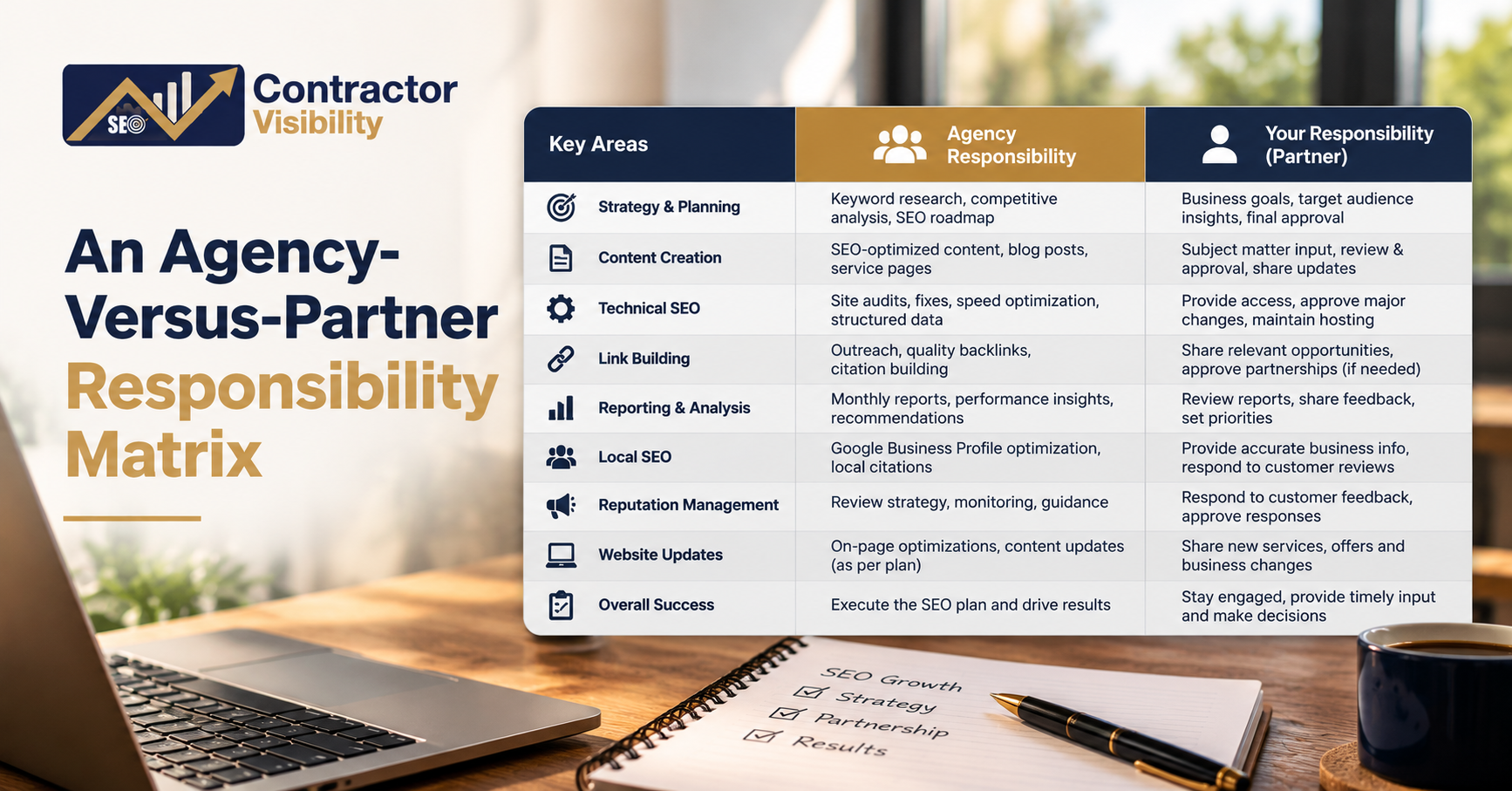
Keep these decisions inside the agency: client goals, scope and pricing, target services and markets, strategic sign-off, client communication, account access policy, and the final report narrative.
Delegate production tasks such as research drafts, technical audits, on-page fixes, content drafts, citation cleanup, link prospecting, and data collection. Require agency approval before new pages, major URL changes, Google Business Profile edits, licensing or pricing claims, and link placements go live.
Use three approval levels. Green means low-risk work can ship with a recorded change log. Amber means the agency reviews before publication. Red means both the agency and client approve a material business or website change. Define examples in writing rather than leaving partners to guess.
How to Choose a White-Label SEO Partner
Ask for redacted work samples from HVAC, plumbing, roofing, or comparable service businesses. Look for service-specific research, clear technical recommendations, and reporting that connects work to business outcomes. A pretty dashboard isn't enough if nobody can explain the underlying data.
A simple evaluation scorecard can help: industry experience (25 points), documented quality control (25), reporting transparency (20), security and ownership practices (20), and commercial fit (10). These weights are an illustrative agency decision tool, not an industry benchmark.
Ask who handles revisions, how urgent incidents are escalated, whether subcontractors are used, and how files are returned at offboarding. Avoid providers who promise a guaranteed number-one ranking. Judge the process and evidence, not the sales pitch.
Build a Repeatable Outsourcing Workflow
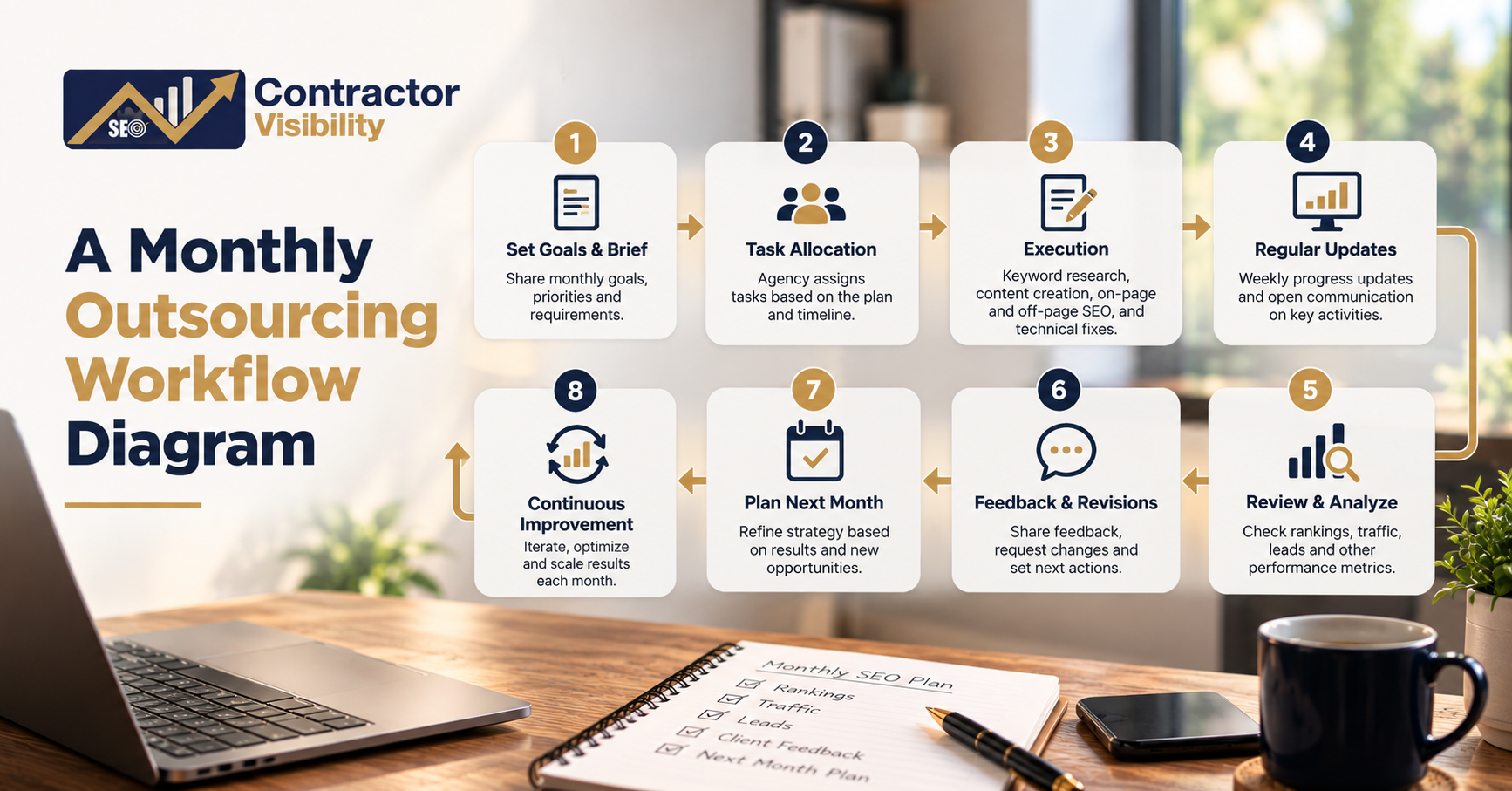
Start with one brief per client. Include profitable services, priority ZIP codes or cities, verified licence details, brand voice, competitors, previous SEO work, approved claims, call-handling expectations, and access requirements. For example, an HVAC company that wants replacement jobs should not receive a content plan dominated by low-value maintenance searches without an explicit reason.
Next, define each deliverable, owner, due date, approval tier, revision limit, and acceptance criteria. Keep one shared tracker and change log. In week one, review outcomes and approve priorities. In weeks two and three, the partner executes and the agency reviews. In week four, the partner provides data, and your account manager delivers the client-facing interpretation.
Set an escalation rule for major incidents: a business profile suspension, broken redirect, unexpected indexing loss, or unauthorised publication should never wait for the next monthly call.
Keep Control of Accounts and Quality
The client should retain primary ownership of critical business assets, including its domain and Google Business Profile. Grant individual user access instead of sharing passwords, and give the partner only the permissions needed for the task. Google explains that business profile managers can perform most day-to-day edits, while owners control user access. See: https://support.google.com/business/answer/3403100
Review every published page for service-area accuracy, actual business offerings, licensing claims, and pricing language. Have a qualified technician verify specialised explanations when necessary. Never invent reviews, customer stories, credentials, or service locations. For redirects, templates, and navigation changes, test before release and document what changed.
Check link-building methods and reject placements designed solely to manipulate rankings. Google Search Central provides the baseline for search policies and technical recommendations: https://developers.google.com/search/docs
Report Leads, Not Just Rankings
Separate work completed from business results. Deliverables include pages published, citations corrected, and technical fixes. Outcomes include qualified phone calls, valid form submissions, booked appointments, and jobs won. Search Console impressions and clicks explain visibility; they do not prove revenue.
Consider a hypothetical monthly report: 80 tracked enquiries, 50 qualified leads, and 20 booked jobs. The qualified-lead rate is 62.5%, and the booking rate from qualified leads is 40%. These figures are examples only. Define lead qualification with the client and check call tracking against actual dispatch or CRM records.
If calls rise but booked jobs do not, investigate service relevance, location fit, missed calls, and intake practices before declaring SEO a success.
Protect Your Agency’s Margins
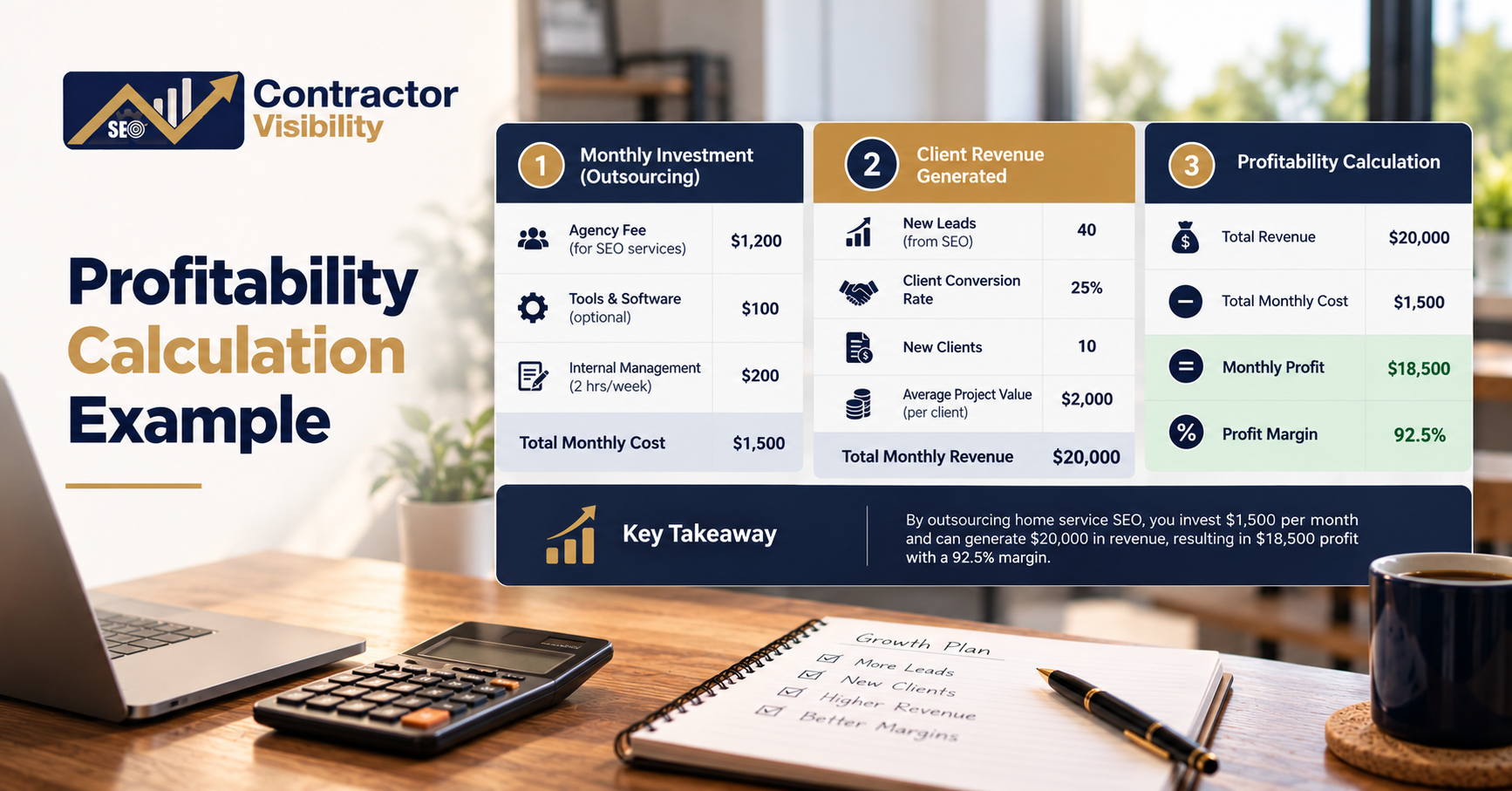
Calculate the contribution after fulfilment and account-management costs, not just the difference between the retainer and vendor fee.
Monthly contribution = client retainer − partner fee − account-management labour − tools and reporting costs.
For example, a $2,000 retainer minus a $1,000 partner fee, four management hours at $50 per hour, and $100 in tools leaves $700, or 35% of revenue, before other overhead and taxes. Two unexpected revision rounds can reduce that quickly.
Put scope limits, revision allowances, turnaround times, and change-order pricing in the agreement. Specify who owns finished work and how the partner returns files and removes access if the relationship ends.
Common Mistakes to Avoid
Choosing on price alone; skipping the client brief; granting unnecessary permissions; publishing without subject-matter review; accepting unverified service claims; tracking rankings but not lead quality; failing to document revisions; and allowing the partner to become the default client contact.
A practical safeguard is to audit the first month's work more closely than later months. If the partner consistently meets your standards, simplify reviews for low-risk tasks without relaxing approval for high-impact changes.
Home Service SEO Outsourcing Checklist
Partner selection
Home service client references and sample deliverables reviewed
The content processing has been confirmed (comparing the new brief with the shared template)
Contract covers confidentiality, work-product ownership, and offboarding.
Onboarding and delegation
Client brief completed
Deliverables, deadlines, and revision limits documented
Approval tiers (green/amber/red) agreed
Access and control
Client owns domain, GBP, Search Console, and analytics.
Individual logins and least-privilege roles set
Quality and reporting
Change log required; content reviewed before publishing
Reporting separates deliverables from lead outcomes.
You run the client call and own the narrative
Conclusion
The best outsourcing arrangement gives your agency more capacity without making the client relationship harder to manage. Start with clear ownership, written briefs, approval rights, and reporting tied to actual business outcomes. Then choose a partner whose work you can inspect and whose process fits your agency.
Contractor visibility provides white-label SEO fulfilment for agencies serving home service businesses. Explore the agency-focused services at https://contractorvisibility.com/ and contact us to discuss your fulfilment needs.